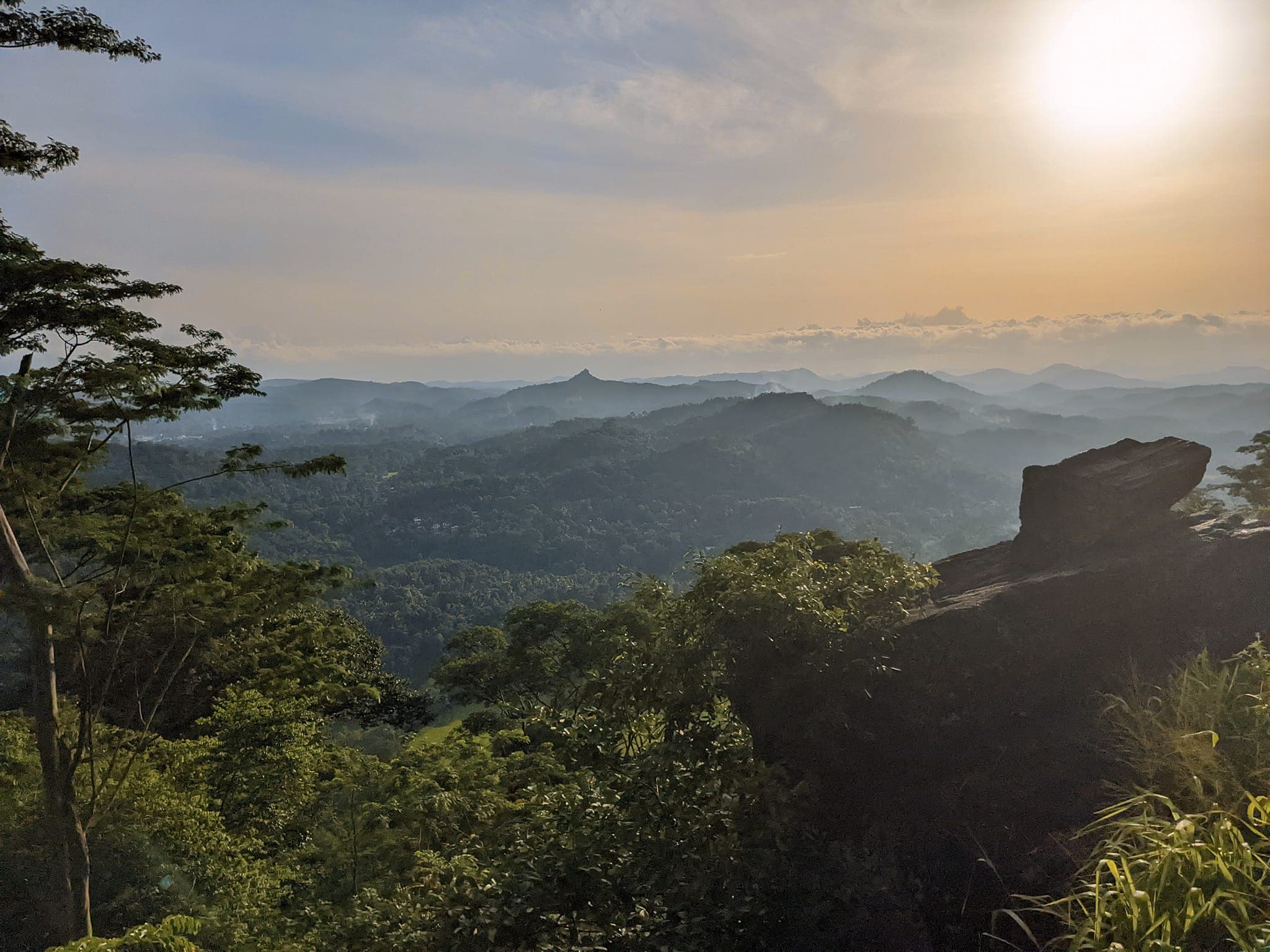
This Kingdom of Conde Uda is strongly fortified by Nature. For, which way soever you enter into it, you must ascend vast and high mountains ... The wayes are many, but very narrow so that but one can go abreast. The Hills are covered with Wood and great Rocks, so that 'tis scarce possible to get up anywhere, but onely in the paths,
Robert Knox,
A Historical Relation of Ceylon (1681)
The relic of a great civilization, Kandy was the last kingdom of independent Sri Lanka. A densely forested, mountain region in the centre of the island, it was an almost impenetrable natural fortress. Surrounded by rugged peaks, trackless paths and steamy tropical jungles, from 1594-1815 this hidden realm held off a succession of foreign invaders, first the Portuguese, then the Dutch and finally the British.
Situated in the heart of the Wet Zone, this culture was almost totally reliant on the surrounding landscape and its resources. A beleaguered and isolated world, much of its art and architecture is simple and small in scale. Governed by its own beliefs and traditions, Kandy was a world unto itself, like the landscape which it now inhabited. It might have been poor in resources but it was not lacking in skill, sophistication nor imagination. The language through which it expressed itself was the Book and the Art of Writing. A process inextricably bound with the natural world, this was an art, a discipline, a skill and meditation ; the legacy of a culture which had survived for two millennia.
Our window into this world is shaped by two widely disparate sources, compiled at very different periods, both by relative outsiders. The first is Robert Knox's A Historical Relation of Ceylon. Published in 1681 this was the first book to be written on Ceylon in the English language. The account of a European detained at the court of Kandy for 20 years, it is one of the most important books ever written about Sri Lanka and gives us an insider's view of Kandyan society and life at the end of the 17th century.
Our second source is the great art historian of India and Sri Lanka, Ananda Coomaraswamy (1877 – 1947). Published after nearly a century of foreign domination, his study Medieval Sinhalese Art (1908), is the classic account of Kandyan arts and crafts. It explores the links between, the decorative arts and crafts of Kandy and the culture and environment in which they originated.
The most essential character of Kandyan painting, as of Kandyan design, in general is its Idealism
Ananda Coomaraswamy,
Medieval Sinhalese Art (1908)
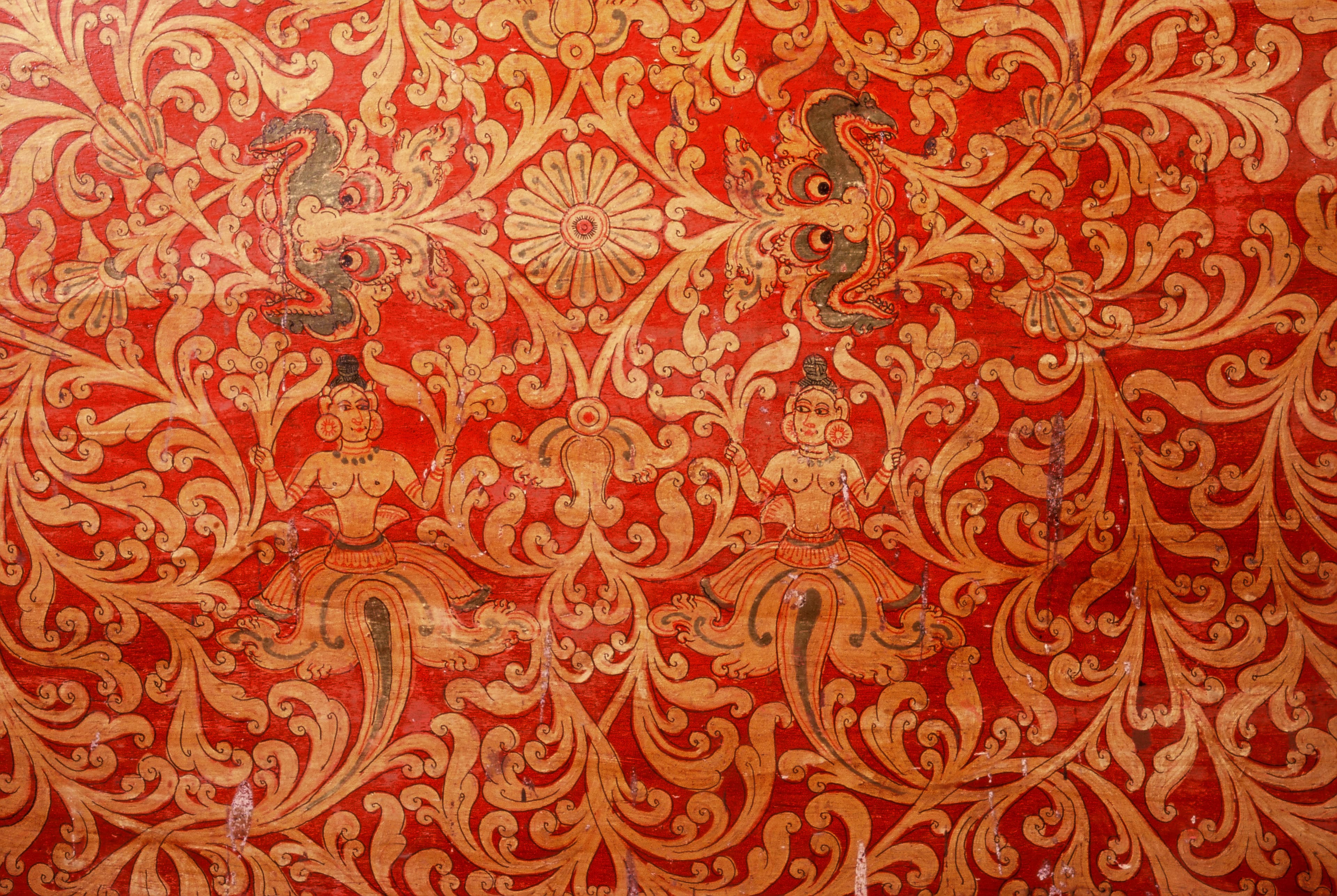
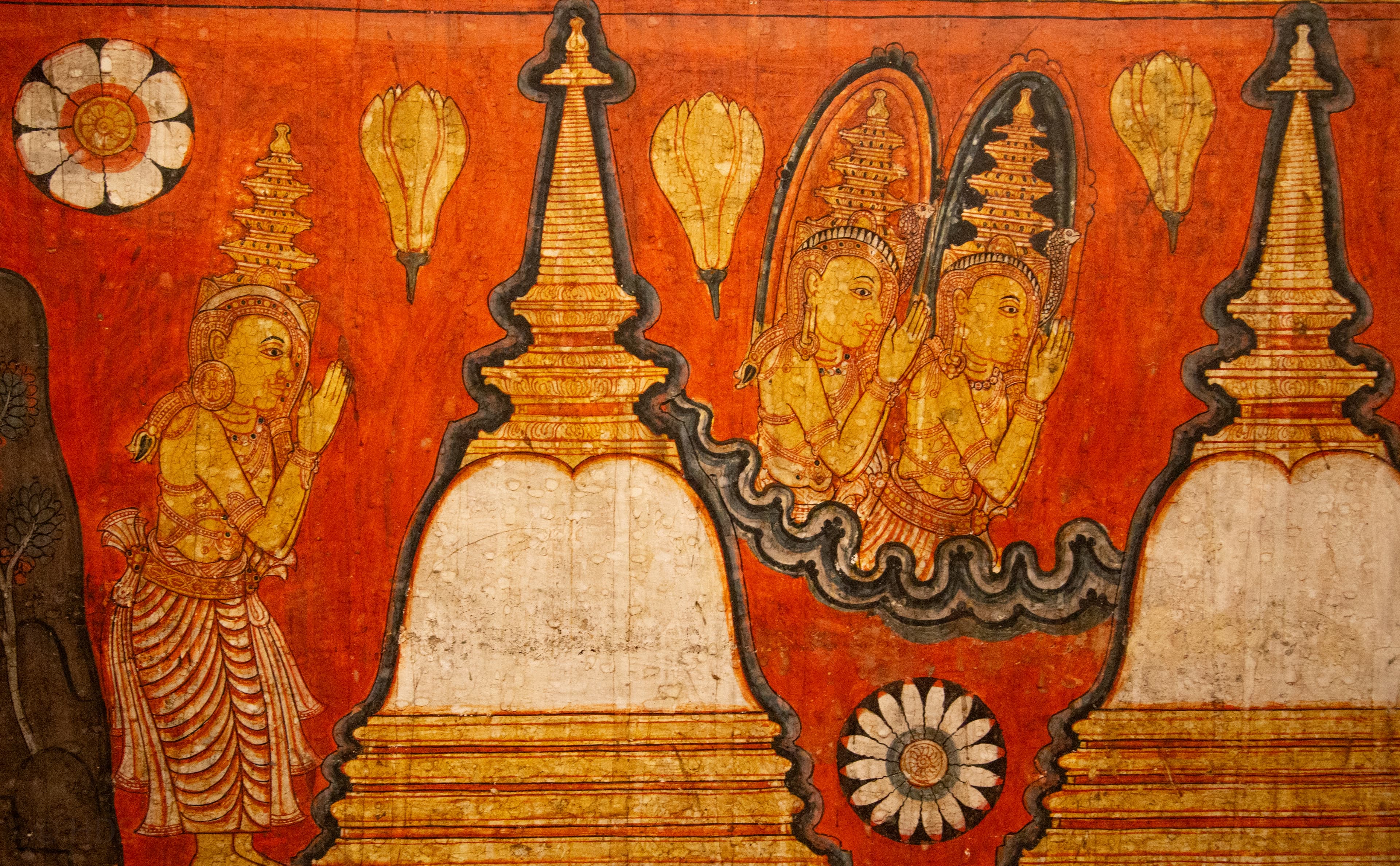
The Art of Worship
Whereas the buildings of the ancient world had dominated the landscape, the temples and stupas of this era merely blend into it. The art of this period represents a move away from the fluid beauty of ancient times into the world of belief, freezing into form and styalization. Rather than engage with the world outside, the Kandyan artist withdrew into himself. Clinging to the world view that he knew, he saw his surroundings in Metaphysical terms. Art and Sculpture became a form of worship.
A World Apart. Family,
Life and Law
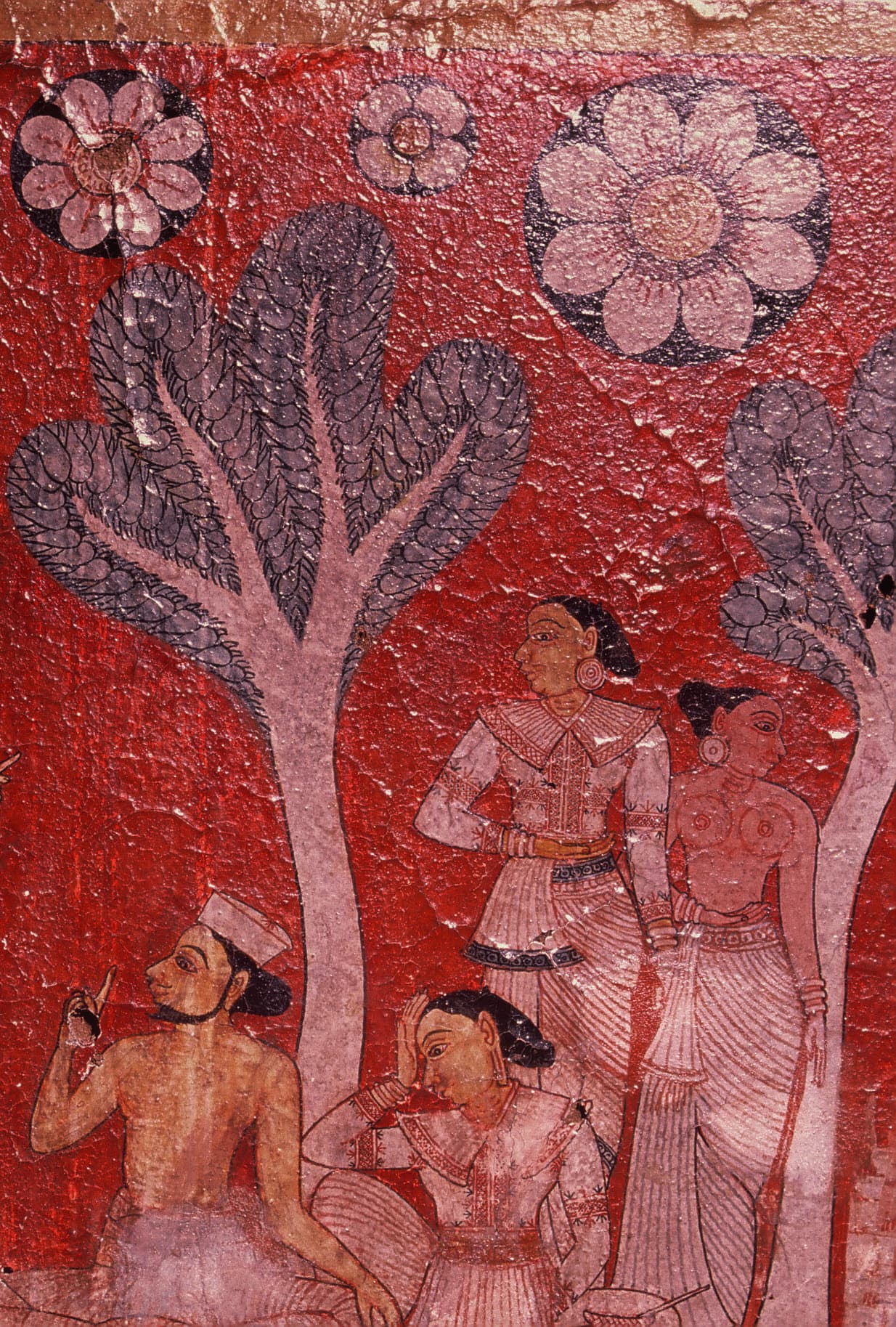
What was this society like? What was the position of women and children in traditional law and society. Although like many Asian civilizations, Kandy was a deeply hierarchical, carefully ordered world, in other respects it was very unusual. The treatises of Kandyan Life and Law which have come down to us touch on issues of female inheritance, legitimacy, marriage and divorce. Revolutionary for their time, they form an important and unusual body of family law which seems just as far reaching and as relevant today. A reading and discussion of original sources opens our eyes and our minds to what seems like a world apart
The forests, the mountains, the buildings, the arts and crafts, the music and the dance, were a window into the mind of this society. How do they reflect its environment, its society and its economy, its beliefs, its preoccupations and its patterns of life? These are the questions that we seek to answer.
Photograph by Devaka Seneviratne.
Kandyan Dance. The Vannam - Trailer - The Dance Ritual of the Eighteen Vannamas