During nearly four centuries of Portuguese, Dutch and British occupation, Ceylonese culture was in eclipse, and the old aristocracy was replaced by a rich urban class whose social and cultural standards were of the West
William Graham,
The Studio Magazine (1954)
The fall of the Kandyan Kingdom in 1815 saw the colonization of entire island. Sri Lanka became the Crown Colony of Ceylon. The capital moved from the very heart of the island to Colombo on the coast. Colombo became the trading hub of South and South East Asia, one of the most important ports in the British empire.
Ceylon came to be dominated by a colonial elite drawn from many communities. Known as Ceylonese, they were bound together by Christianity, Western values, and a deeply Anglicized lifestyle. As the country neared independence, the products of this new society began to reclaim Sri Lanka's ancient heritage. Discovering Sri Lanka's art, history and culture, they absorbed the techniques and styles of European Modernism, combining and fusing these elements to create a unique Sri Lankan idiom.
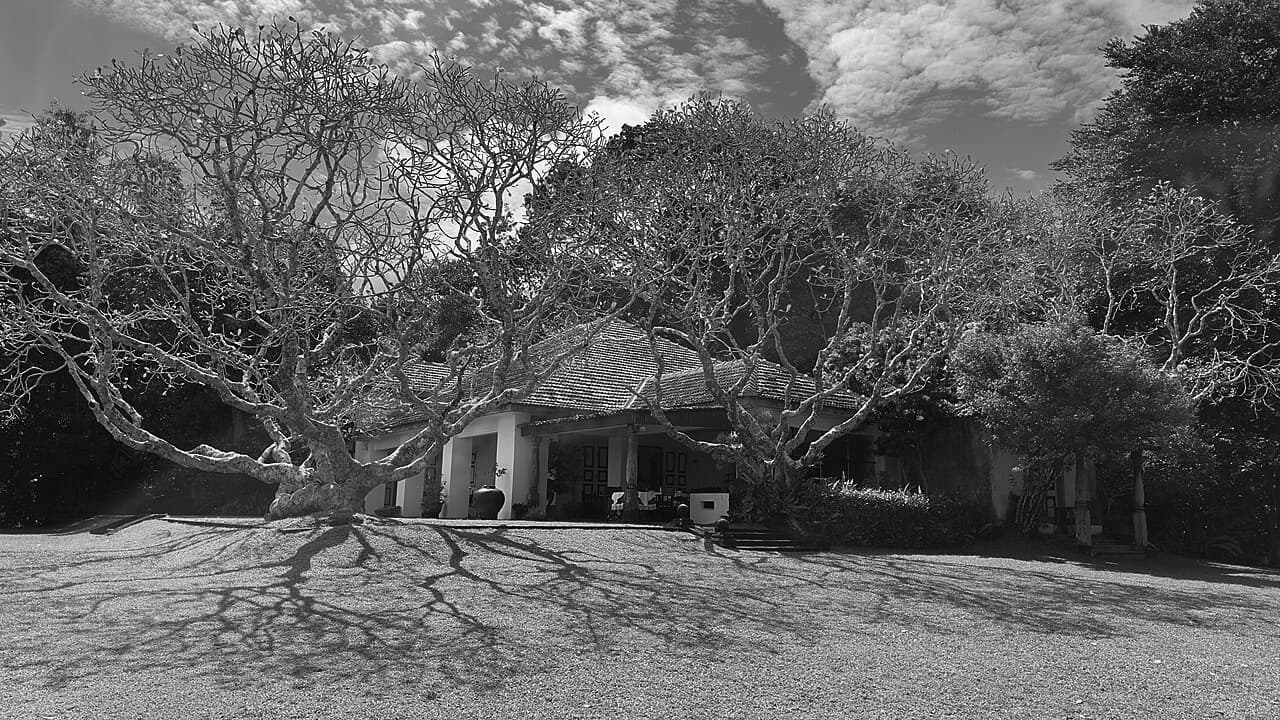
One of these figures was the architect Geoffrey Bawa (1919-2003), now regarded as one of the most important and influential Asian architects of the 20th century. Known as the leader of the Tropical Modernist movement, Bawa combined a deep understanding of European style and modernity with the Sri Lankan heritage. Inspired by a tremendous feeling for the environment and landscape of Sri Lanka, his buildings are at one with the land. At his home at Lunuganga, Bawa created a European renaissance garden in the tropics, a landscape dominated by sweeping views. His most famous work however, is perhaps the iconic Kandalama hotel, a seamless blend of interior with exterior, of rock, forest and water with stone, steel and concrete.
Kandalama Hotel
The painter George Keyt (1901-1993) is perhaps the best example of this embodiment of tradition, modernity and identity. Fusing the influences of Modernism and Cubism with his own unique idiom, Keyt became one of the great figures of Asian Modernism. Steeping himself in the art and culture of Sri Lanka's ancient Buddhist civilization, Keyt combined this with a deep and powerful attraction to the Indian classical tradition. Assimilating, absorbing and combining these traditions with the experimentation and innovation of European Modernism., he created a new artistic vocabulary of his very own, one which epitomized the synthesis of East and West.
This synthesis of East and West comes alive in the murals which Keyt painted for the Gothami Vihara, a Buddhist temple in Colombo. Depicting the Life of Buddha (1939-1941), they show his life story from the events before his birth to his final passing away. Expressed in the language of the visual arts, it encapsulates this blend of living past and present, tradition and modernity. It is perhaps the best place to end this Voyage into the Mind of a Living Civilization.
George Keyt and the 43 group
Tab. Rendez-Vous with Yasmin and Kumar #41 - George Keyt and the 43 group
https://www.youtube.com/watch?v=I-YOx8yu-sE