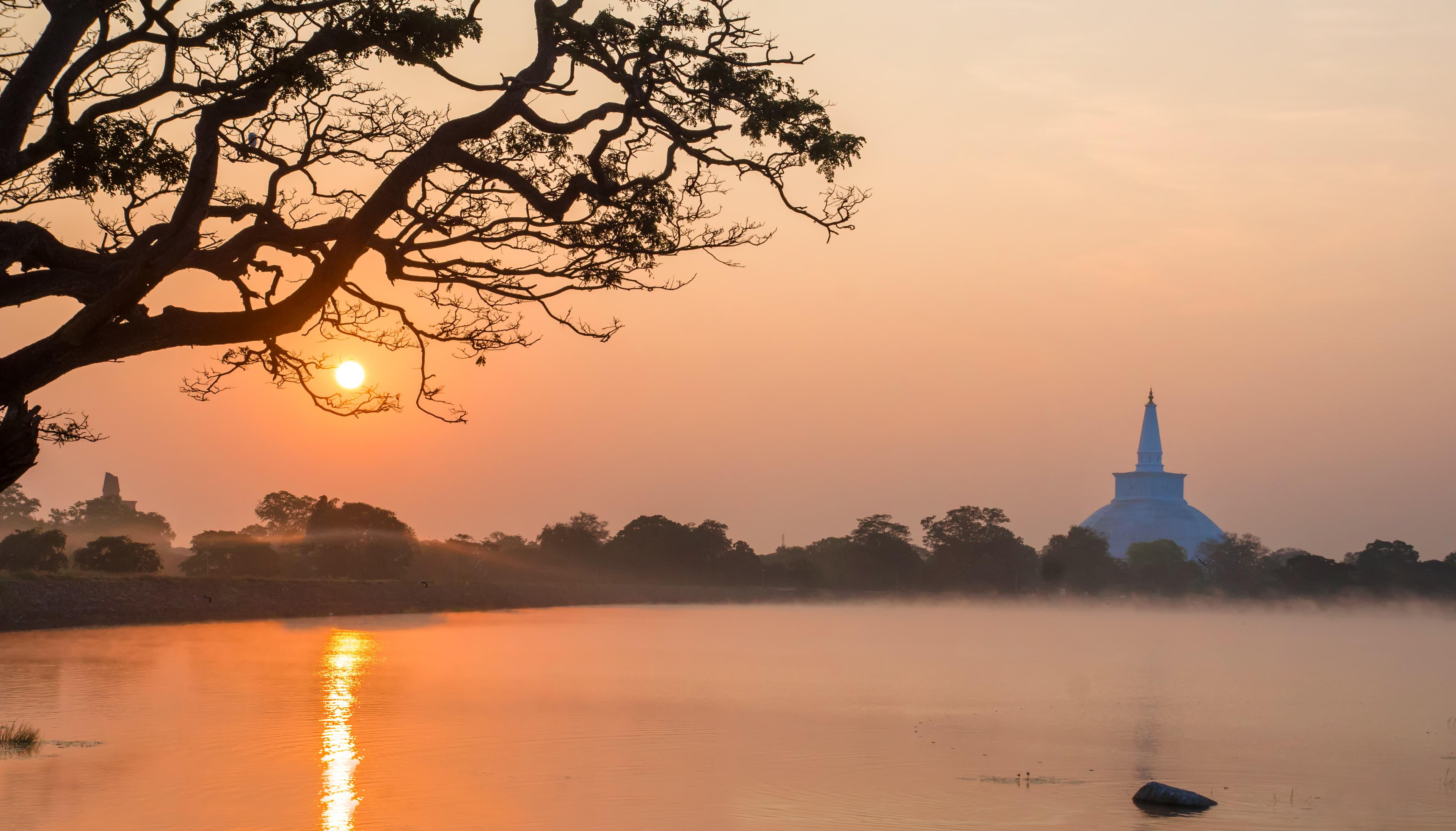
The monumental masses speak of a time when man thought that things would last forever and dreaming of posterity, he built on a vast scale. These massive ruins are all that is left of an era of art, architecture and mighty kings, a Golden Age against which everything which came afterwards was measured and often found wanting.
Nihal Fernando and SinhaRaja Tammita-Delgoda,
Eloquence in Stone, The Lithic Saga of Sri Lanka (Studio Times, 2008)
.svg.png&w=3840&q=75)
A capital and a monastic centre, in its day Anuradhapura was one of the great cities of the ancient world, the centre of a civilization which lasted from the 4th century BC to the end of the 10th century AC. One has only to read the chronicles to picture what it must have looked like, its gigantic dagabas towering over many-storied palaces and monasteries, their roofs glittering with gilded bronze and multi-coloured tiles.
A sacred city centred around the worship of the Buddha, Anuradhapura is dominated by giant stupas which rank amongst the greatest structures in antiquity. At its heart lies the oldest historical tree in the world, the Sri Maha Bodhi Tree, a sapling of the tree under whichthe Buddha attained Enlightenment. The lifeblood of this culture was water. Anuradhapura was an irrigation civilization; a world which revolved around the use and management of water. This was the source of its food, its vitality and its prosperity.
Through the medium of illustrated lectures, meditation in caves and discussion under the stars, reading ancient texts and chronicles and studying philosophy, religion, art and architecture, we seek to understand the nature of this civilization and how and why it came about.
In Search of the Malwatu Oya
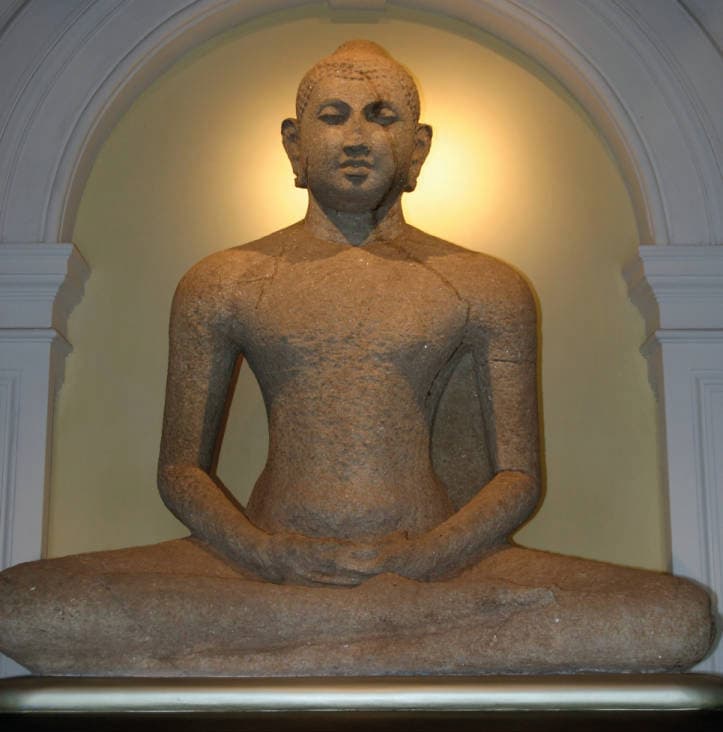
The arrival of Buddhism in the 3rd century BC brings the story of the island firmly within the realm of historical fact. Eight miles outside Anuradhapura, the rocky mountain of Mihintale rises abruptly out of the plain to a height of almost 1,000 feet. Here on the slopes of the mountain, the Apostle Mahinda encountered the king as he was in pursuit of a stag. Mahinda told him the story of the Buddha and preached his doctrine. The conversion of the king and the whole country to Buddhism provides the foundation for our story.
Nihal Fernando and SinhaRaja Tammita-Delgoda,
Eloquence in Stone, The Lithic Saga of Sri Lanka (Studio Times, 2008)
Buddhist Monks Chanting at Sunrise (Ella, Sri Lanka)